Humanoid robots: How to bring security in your next project
Why humanoid robots need security inside
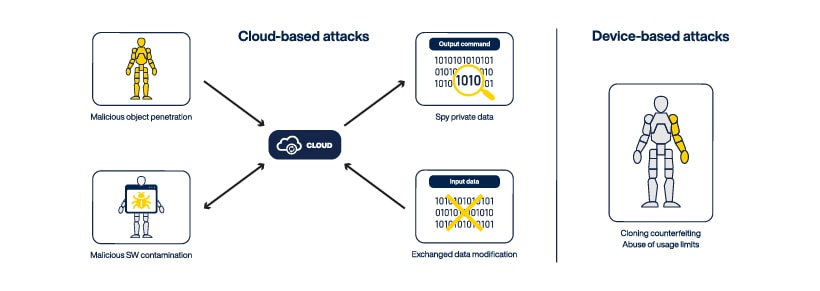
Humanoid robots are becoming more capable: walking, grasping objects, and interacting with people. As they move closer to our daily lives and work alongside humans, the stakes for robot manufacturers rise. And, with more robots connected to cloud networks, the attack surface expands even further: a malfunction, a breach, or a loss of control is no longer just a technical issue. It can become a real safety risk.
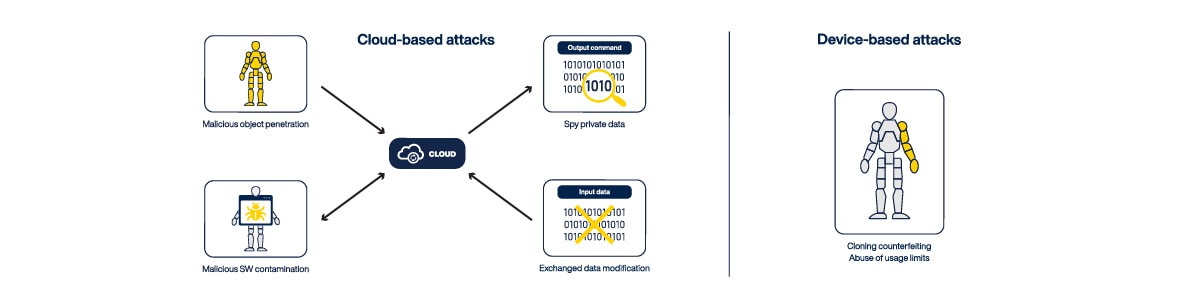
Discover the two main types of attacks on humanoid robots: cloud-based and device-based.
How secure elements protect humanoid robots
Secure elements create trust by authenticating subparts, tracking usage, or simply by ensuring the robot is running on the proper piece of software. Additionally, they prevent from data manipulation and privacy breach by establishing a secure connection to Cloud networks.

Authentication
Strictly authenticate robot component to avoid malicious penetration and protect against clones & counterfeits

Keep track of usage
Monitor and control the usage of consumables, peripherals, and accessories thanks to secure counters

Data flow protection
Protect data from manipulation and privacy breach with TLS establishment

Ensure platform integrity
Verify application integrity to ensure the robot runs the expected software
Choose a secure element designed for humanoid robots
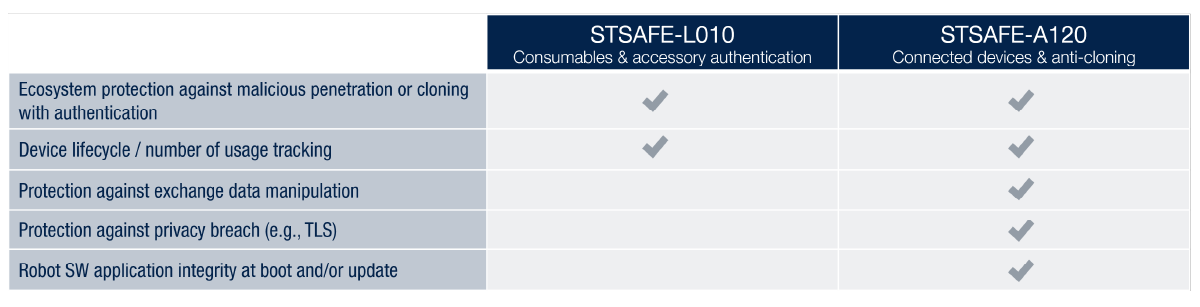
Whether you need to secure connected robots or their subparts, STSAFE can help. We’ve selected two product lines for different robot use cases. Use the comparison table below to choose the right one.

Authentication of robot subparts
STSAFE-L010
Ideal to authenticate consumables and peripherals. Companion chip directly mounted on a consumable, peripheral, or accessory. Connected via a simple I²C or ST1Wire interface.

Turnkey security for connected robots
STSAFE-A120
Provides a full set of security services: from authentication to secure connection with Cloud networks. Companion chip connected to the device host via a simple I²C interface.
Which STSAFE for your robot?