AN5105 · Application noteGetting started with touch sensing control on STM32 MCUs
Download .pdfOpen in the full document

Charge transfer

Charge transfer

The acquisition is based on the measurement of the sensor channel capacitance.

To ensure that the Cx capacitance is correctly charged, it is necessary to monitor the pin connected to the sensor. On the sensors and shield sides, it must observe a complete Charge/Discharge cycle.
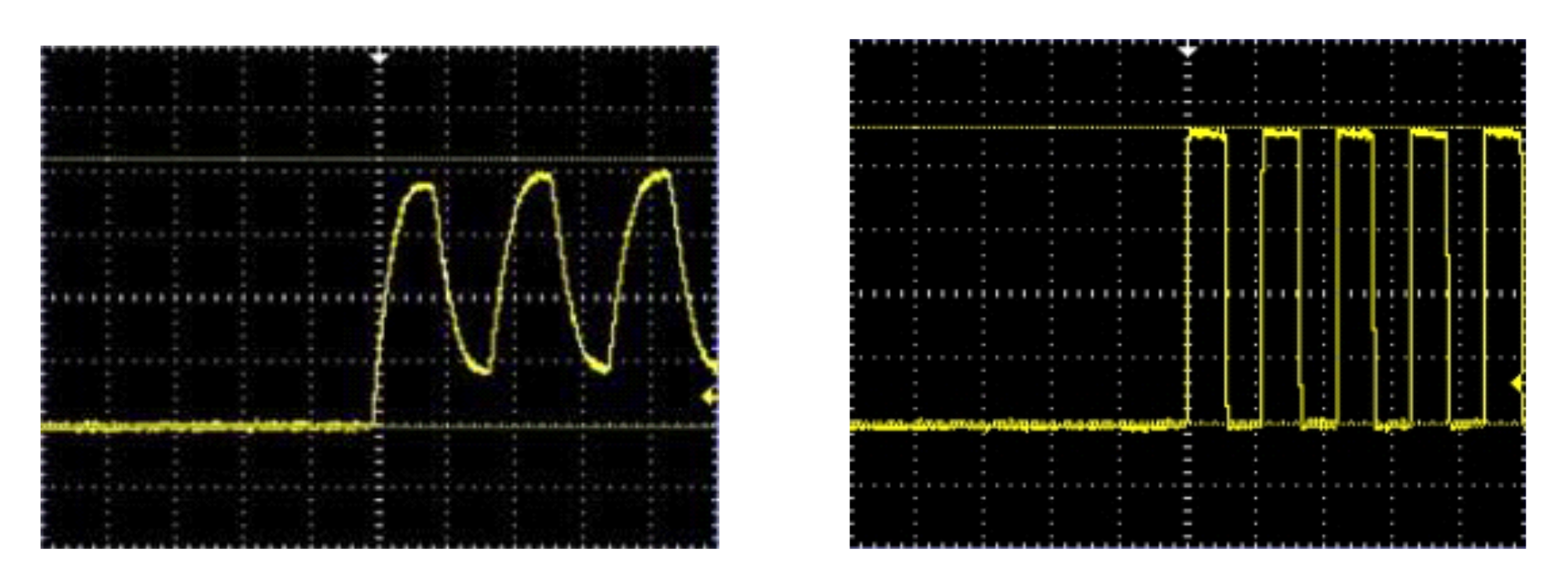
Figure 7. Incomplete and complete charge transfer cycle

In this example, to complete the charge transfer cycles, the following parameter must be modified as below:

  • INCREASE:
    • htsc.Init.PulseGeneratorPrescaler
    • htsc.Init.CTPulseHighLength
    • htsc.Init.CTPulseLowLength
  • DECREASE:
    • Sysclk

Table 5 Charge transfer documentation gives a list of documents containing information about the charge transfer.

Table 5. Charge transfer documentation
IdTitleChapters
AN4299Improve conducted noise robustness for touch sensing applications on MCUsActive shield
AN4316Tuning a touch sensing application on MCUs Charge transfer period tuning

Sensitivity

Sensitivity is a key point in touch sensing applications. The sensitivity can be improved by:

  • reducing the air gap,
  • reducing the panel thickness,
  • choosing the dielectric with higher εR ,
  • a GND plane that is not too close to the shield and sensors,
  • avoiding metallic paint near shield and sensors.

Table 6 Sensitivity documentation gives a list of documents containing information about the sensitivity.

Table 6. Sensitivity documentation
IdTitleChapter
UM1913Developing applications on STM32Cube with STMTouch touch sensing library Available touch sensing channels
AN4312Design with surface sensors for touch sensing applications on MCUsAir gap:
  • Reduce air gap
Panel material:
  • Reduce panel thickness
  • Choose dielectric with higher εR
Metal chassis:
  • GND not too closed from Shield and Sensors
  • Avoid Metallic paint near Shield and Sensors
Mechanical construction and PCB to panel bonding. Surface sensor design
AN4316Tuning a touch sensing application on MCUs All chapters

Dielectric example

Table 7. Dielectric constants of common materials used in a panel construction
MaterialεR
Air1.00059
Glass4 to 10
Sapphire glass9 to 11
Mica4 to 8
Nylon3
Plexiglass3.4
Polyethylene2.2
Polystyrene2.56
Polyethylene terephthalate (PET)3.7
FR4 (fiberglass + epoxy4.2
PMMA (Poly methyl methacrylate)2.6 to 4
Typical PSA2.0 - 3.0 (approximately)

Key

  • Key sensors are used in common application
  • You can get deeper key information in the following documents:

Table 8 Key documentation gives a list of documents containing information about the key.

Table 8. Key documentation
IdTitleChapters
UM1913Developing applications on STM32Cube with STMTouch touch sensing libraryTouchkey sensor
AN4312Design with surface sensors for touch sensing applications on MCUs

Touchkey sensor

Linear or slider

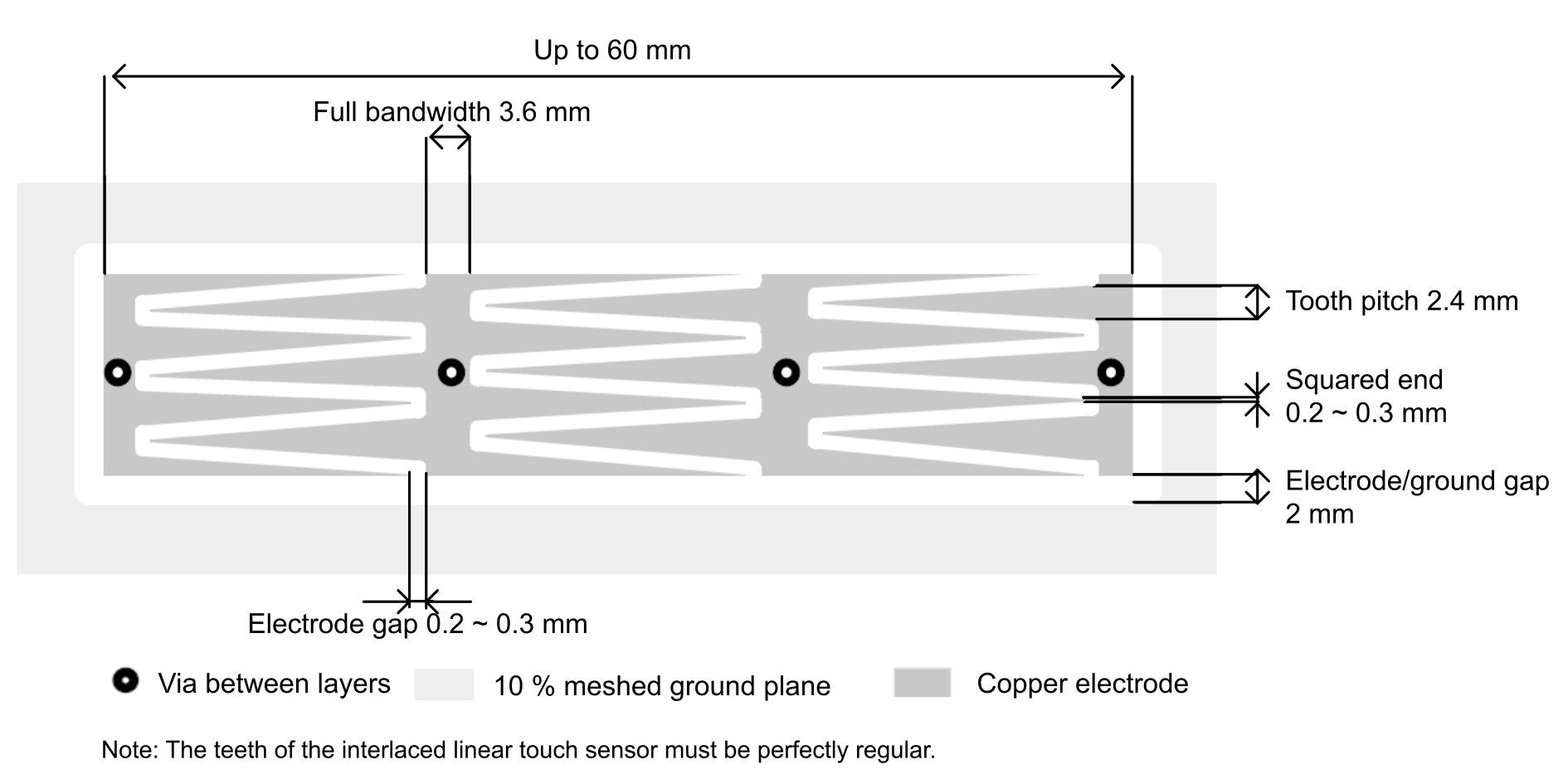
A linear is a set of contiguous capacitive electrodes. Figure 9 Interlaced linear touch sensor with three channels / four electrodes (half-ended electrodes design) shows a slider used on a discovery board.

Figure 9. Interlaced linear touch sensor with three channels / four electrodes (half-ended electrodes design)

Table 9 Linear touch sensor documentation gives a list of documents containing information about the linear touch sensor.

Table 9. Linear touch sensor documentation
IdTitleChapters
UM1913Developing applications on STM32Cube with STMTouch touch sensing libraryLinear and rotary touch sensors
AN4312Design with surface sensors for touch sensing applications on MCUsLinear sensor

Rotary sensor or wheel

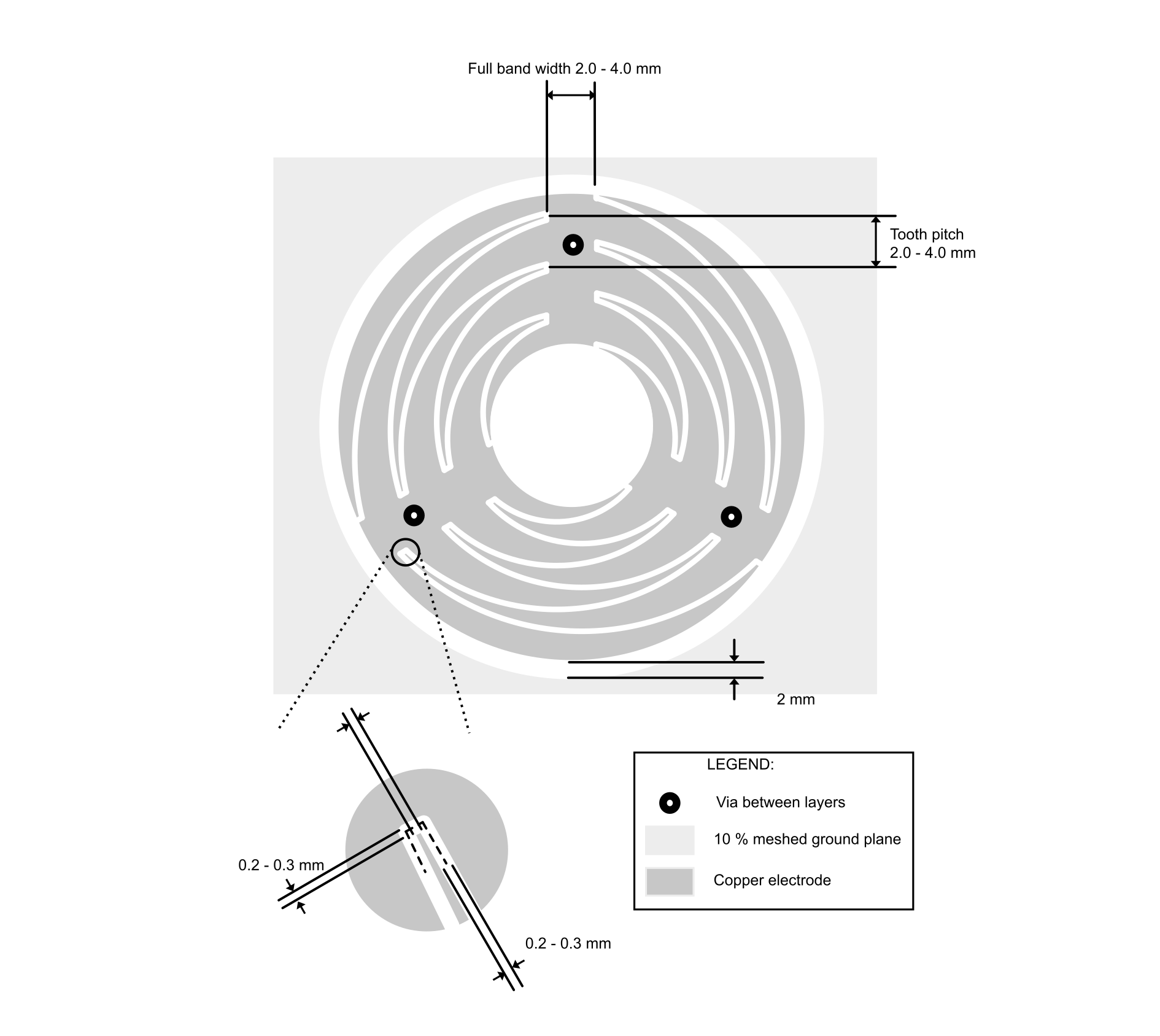
A rotary is a set of contiguous capacitive electrodes.

Figure 10. Interlaced patterned rotary sensor with three channels / three electrodes

Table 10 Rotary sensor documentation gives a list of documents containing information about the rotary sensor.

Table 10. Rotary sensor documentation
IdTitleChapters
UM1913Developing applications on STM32Cube with STMTouch touch sensing libraryLinear and rotary touch sensors
AN4312Design with surface sensors for touch sensing applications on MCUsRotary sensor

Active shield or driven shield

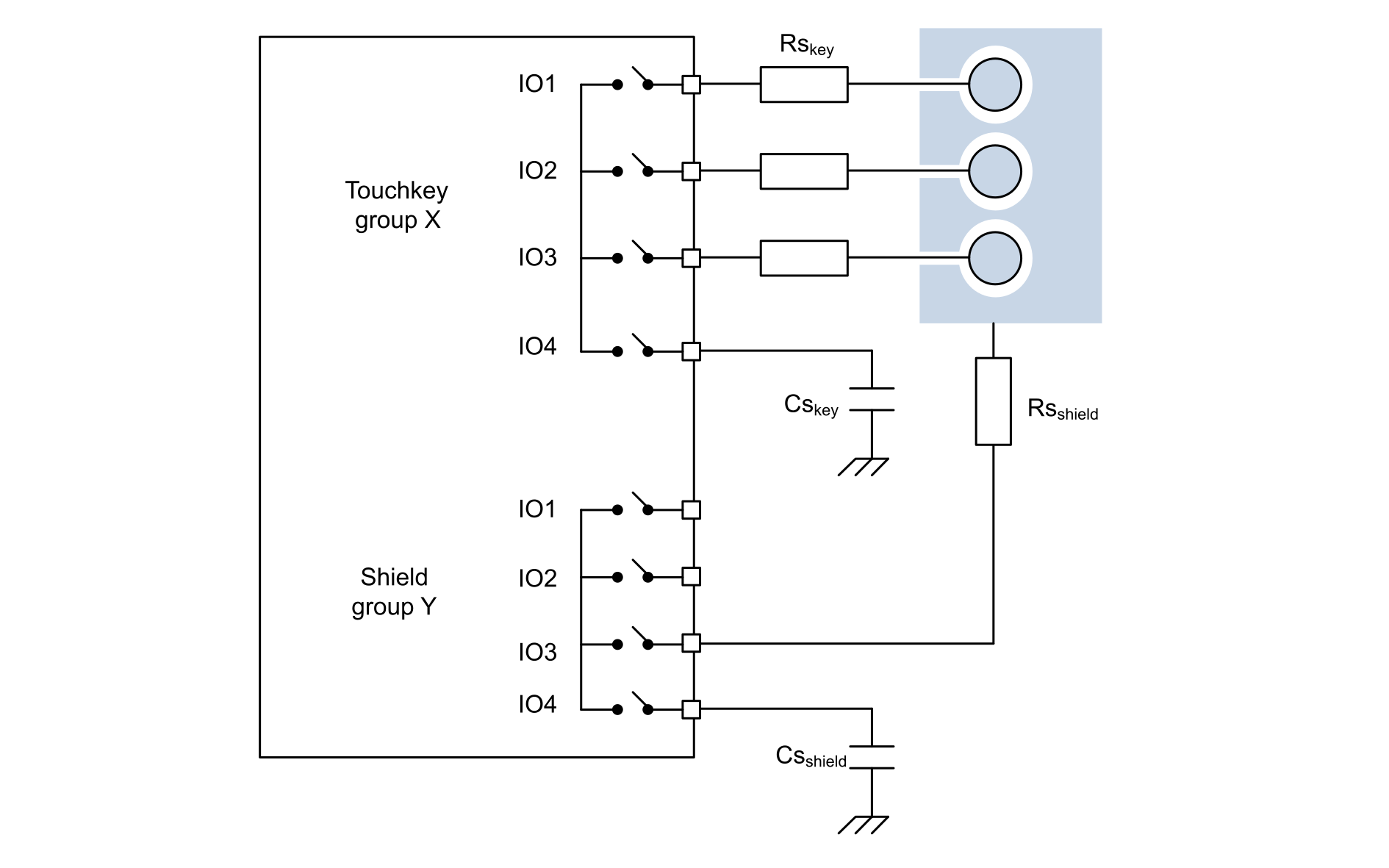
Active shield or driven shield. (this name is used in some application notes) drives the shield plane with the same signal as the electrode.

There are several advantages using Active Shield instead of a grounded shield:

  • The parasitic capacitance between the electrode and the shield no longer needs to be charged.
  • Protect the touch electrodes from a noise source.
  • Increase system stability and performance when a moving metal part is close to the electrode.
Figure 11. Active shield principle

Table 11 Active shield documentation gives a list of documents containing information about the active shield.

Table 11. Active shield documentation
IdTitleChapters
AN4299Improve conducted noise robustness for touch sensing applications on MCUsActive shield
AN4312Design with surface sensors for touch sensing applications on MCUs Driven shield
AN4316Tuning a touch sensing application on MCUs Shield adjustment
OLTSTM32L4 online trainingTouch sensing controller (TSC)