Smart Mobility

Smart power distribution
Smart power distribution
Simplify wiring, improve safety, and scale SDV-ready architectures with a complete portfolio built for modern vehicles

Design safer ADAS with ASIL-B-ready EEPROM
Design safer ADAS with ASIL-B-ready EEPROM
Discover the industry-first ASIL-B-ready EEPROM portfolio.

Power & Energy

Low-power RS485
Low-power RS485
High-speed transceivers with integrated ESD protection ensure reliable industrial communication in tough environments

Power AI, drive robotics
Power AI, drive robotics
Switch faster for smaller magnetics in 48 V server bus conversion, and cut heat in humanoid joint drives.

Cloud-connected Autonomous Things

New STM32H5 discovery kit
New STM32H5 discovery kit
Prototype faster with a touchscreen display, connectivity expansion, and built-in debugging on the STM32H5F5J-DK.

Sustainable motion MEMS
Sustainable motion MEMS
Learn how ST combines lead- and BPA-free design with the performance required for advanced motion sensing.

Upcoming events
Want to know more about our latest technologies?Come and meet us.
Check out all our upcoming events Check out all our upcoming events


Piezo MEMS Design Challenge
Innovation drives our technology, and collaboration is what fuels it. The Piezo MEMS Design Challenge, hosted by ST and A*STAR Institute of Microelectronics and engaging university students, highlights our efforts to advance MEMS technology. The IEEE MEMS Technical Community is our supporting partner.
Special event
Online 25 Sep - 27 Nov 2026
Find out more Find out more.jpg)
.jpg)


50+ Case studies.
Get started.10+ Free software and tools.
Find support.20+ Resources and documents.
Run edge AI on microcontrollers, microprocessors, and smart sensors.
The ST Edge AI Suite empowers developers to harness the power of edge AI in their embedded applications.


Newsroom
See all the latest news from ST.
Blog
Read our latest technical articles.
Newsroom
See all the latest news from ST.
STMicroelectronics introduces automotive image sensor to help scale affordable in-cabin sensing

STMicroelectronics and NUS launch Corporate Lab to power the future of Edge AI in Singapore
STMicroelectronics Reports Q2 2026 Financial Results

STMicroelectronics unveils world’s first ST54M secure mobile chip with post-quantum cryptography for next-generation connected services

Blog
Read our latest technical articles.
STSPIN9P: ST’s first 75 V high-current motor drivers with low RDS(on) is so small it helps grow new applications
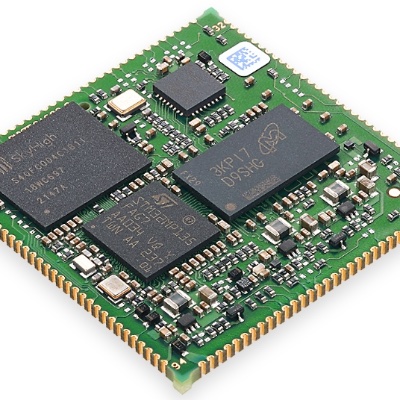
PHYTEC SoMs, production boards, and our 3 tips to get started with an STM32 microprocessor
Update: Physical AI now with functional safety, ST sensors, a robotics platform, and innovations through collaboration

Sustainable MEMS: high-performance motion sensing designed with responsibility in mind