How SpaceX brought internet access to more places
For years, the promise of broadband from space sounded like the kind of idea that lived more easily in a strategy deck than in the real world. SpaceX changed that. By building Starlink, the company has turned low Earth orbit satellites into a working communications network, one that now serves more than 12 million users1 in more than 160 countries. For people in rural areas, on remote job sites, at sea, or far beyond the reach of traditional internet infrastructure, that matters. Starlink is not just a story about rockets and satellites. It is also a story about engineering precision, manufacturing discipline, and the semiconductor technology needed to make a radically complex system work at scale. That is where ST came in.

Challenge
- Bring reliable broadband connectivity to homes and businesses worldwide through low Earth orbit satellites
- Design and industrialize highly complex phased-array antennas for consumer use
- Scale production to very high volumes while maintaining performance, quality, and cost competitiveness
- Support future satellite and terminal generations with a long-term technology roadmap

Solution
- Ten years of co-design between SpaceX and ST engineers in France and Italy
- ST BiCMOS technology for high-performing phased-array antennas
- Innovative packaging approach (PLP) enabling high-volume manufacturing
- FD-SOI technology in the STM32V8 MCU, supporting satellite-to-satellite laser links
- STM32, secure elements, and GNSS across Startlink systems

Impact
- Helped enable Starlink to become a global broadband platform serving more than 12 million users
- Supported production, enabling more than 130,000 new subscribers per week
- Contributed to billions of co-designed products used in millions of terminals
- Enabled delivery of high-speed internet in more than 160 countries
- Created a foundation for future Starlink satellite and terminal generations
Behind Starlink’s plug-and-play experience
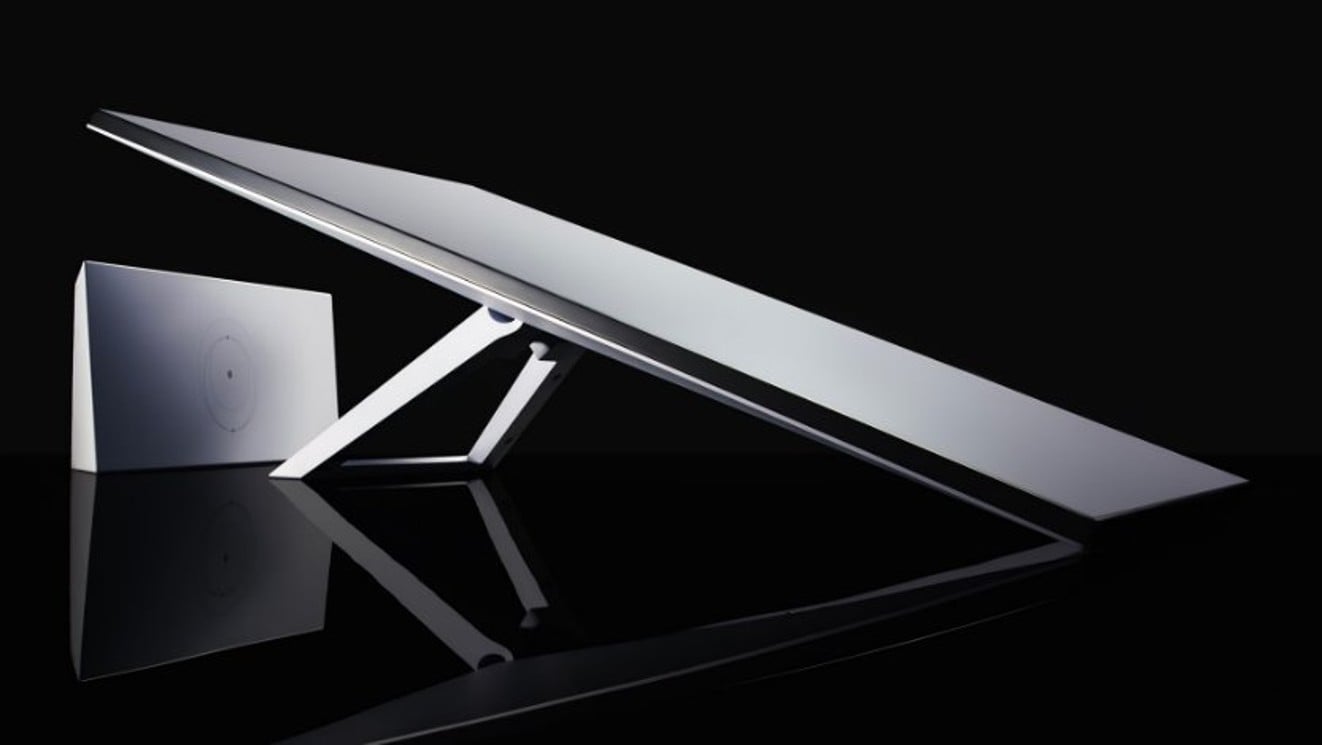
Starlink’s white terminal looks simple from the outside: plug it in, point it at the sky, and it works. But that simplicity hides a highly complex system behind it. The terminal must maintain a connection with a fast-moving satellite constellation, operate reliably in harsh weather, and be manufactured at very high volumes without sacrificing quality or cost. Few hardware platforms face such demanding requirements.

“
Our partnership with ST has been instrumental in enabling the scale and performance of Starlink.”
Gwynne Shotwell, President and COO, SpaceX
Why SpaceX relies on ST technology
A big part of the story is ST’s deep expertise in BiCMOS technology, which helps power the high-performance phased-array antennas inside Starlink terminals, thanks to its outstanding RF performance in the K band. Those antennas enable the terminal to track satellites overhead moving at 27,000 km/h and to switch smoothly from one satellite to another, helping achieve an ultra-fast and stable user connection, even in the most remote areas. But performance was only half the challenge. SpaceX also needed a way to build at scale, and ST introduced a radical innovation in packaging for volume and cost efficiency: a new manufacturing platform based on panel-level packaging, where chips are assembled and processed on a large panel rather than individual wafers. The payoff has been dramatic: a delivery rate of more than 5 million RF chips a day, helping Starlink scale faster than many thought possible.
“
We are excited to continue this journey with ST, and make high-speed internet available to more people.”
Gwynne Shotwell, President and COO, SpaceX
ST's contribution does not stop at the user terminal. It extends all the way into the satellites themselves, which also feature larger phased-array antennas. Starlink also relies on ST's FD-SOI (fully depleted silicon-on-insulator) technology, through the STM32V8 microcontroller, which SpaceX selected for the mini laser systems that link Starlink satellites to one another at extremely high speeds in low Earth orbit.
As Starlink moves toward new satellite generations and next-generation terminals, the collaboration between SpaceX and ST continues to focus on the technologies that will shape the next phase of space-based connectivity.
1 As of 2026, SpaceX Reports Second Quarter 2026 Results: https://s21.q4cdn.com/184289198/files/doc_financials/2026/q2/SpaceX-Reports-Second-Quarter-2026-Results.pdf

CUSTOMER
SpaceX