Edge AI explained
What is edge AI?
Artificial intelligence (AI) is transforming the world. But not all AI technologies work the same way.
They can be deployed in different ways depending on where the data is processed, either in the cloud or directly on the device.
Cloud AI involves data exchanges between a device and powerful, centralized servers for analysis. This approach is ideal for training complex models on massive datasets and for applications that are not time-sensitive. For example, analyzing millions of customer reviews to identify product trends, or processing large batches of medical images for research purposes where results can take hours or days.
Edge AI refers to the deployment of artificial intelligence algorithms and models directly on devices at the edge. It brings the power of artificial intelligence closer to where data is generated, enabling faster, more secure, and efficient AI-driven applications without relying heavily on cloud infrastructure. For instance, a smartphone's facial recognition system unlocks instantly without sending data to the cloud, or a smart solar panel equipped with arc detection identifies faults in real-time, cutting power within milliseconds to prevent fire and severe damage.
Industrial IoT
Factory equipment adjusting operations and preventing breakdowns or worker injuries based on real-time monitoring
Smart homes, cities, and infrastructure
Face recognition systems for access control or traffic lights optimizing flows based on congestion patterns
Healthcare and consumer electronics
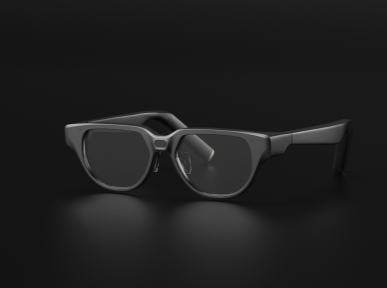
Wearable devices monitoring heart rhythms and detecting irregularities immediately
Automotive
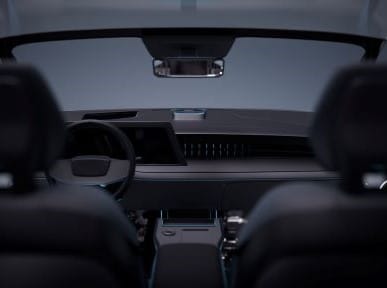
Battery management systems, predictive maintenance and safety features, and ADAS make split-second decisions to ensure driver and passenger safety
Enabling a wide application range
Edge AI devices vary widely in size, complexity, and capability, from smart sensors and microcontrollers to sophisticated autonomous systems requiring complex real-time AI inference.
This universality enables edge AI to be applied across many industries.
Edge AI opens a new range of embedded applications, transforming various sectors with innovative capabilities. We can categorize the impact of edge AI into three fundamental use cases - from the capabilities that are being deployed today, to what will be possible tomorrow.
Enabling a wide application range
Edge AI devices vary widely in size, complexity, and capability, from smart sensors and microcontrollers to sophisticated autonomous systems requiring complex real-time AI inference.
This universality enables edge AI to be applied across many industries.
Edge AI opens a new range of embedded applications, transforming various sectors with innovative capabilities. We can categorize the impact of edge AI into three fundamental use cases - from the capabilities that are being deployed today, to what will be possible tomorrow.
Industrial IoT
Factory equipment adjusting operations and preventing breakdowns or worker injuries based on real-time monitoring
Smart homes, cities, and infrastructure
Face recognition systems for access control or traffic lights optimizing flows based on congestion patterns
Healthcare and consumer electronics
Wearable devices monitoring heart rhythms and detecting irregularities immediately
Automotive
Battery management systems, predictive maintenance and safety features, and ADAS make split-second decisions to ensure driver and passenger safety
Edge AI in action: customer stories
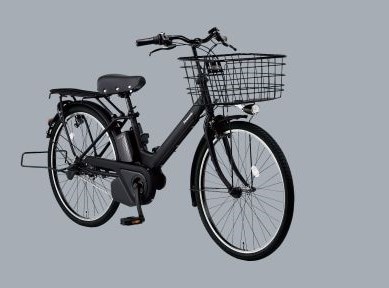
Customers around the world leverage ST edge AI solutions to deliver faster, more secure, and more efficient AI-powered experiences across a wide range of applications.


Two hardware classes powering edge AI
Edge AI can be deployed on two hardware classes offering different power consumption levels and performance capabilities. Microcontrollers and sensors enable tiny edge AI on highly resource-constrained devices, while microprocessors and application processors can deploy more advanced AI applications at the edge.
ST has been investing in tiny edge AI for over a decade, making it a reality for customers around the globe.
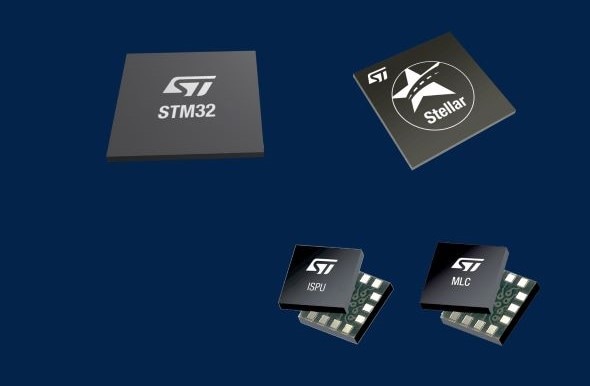
Microcontrollers
and smart sensors
(tiny edge AI)
MCUs and smart sensors perform real-time data processing and decision-making locally, minimizing latency. This field is known as tiny edge AI.
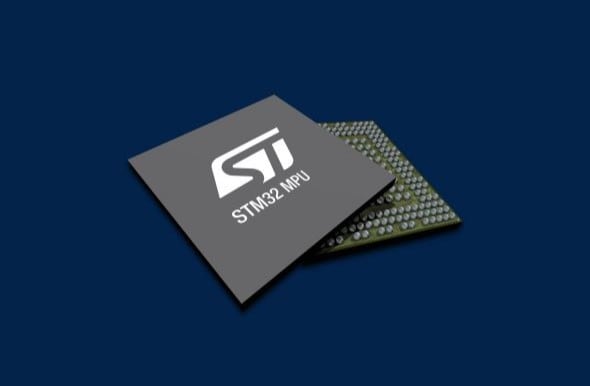
Microprocessors and
application processors
MPUs and APUs strike a balance between performance and power consumption, making them suitable for more complex edge applications.

Related knowledge
| Document | Type | |
|---|---|---|
| Sensors for AI-powered intelligent factories | Whitepaper | |
| Enabling intelligent factories with AI-powered sensors for Industry 5.0 | On-demand webinar
| |
| Implement advanced tracking and high-impact sensing | On-demand webinar | |
| Uncover the potential of edge AI by exploring a real-world application | On-demand webinar | |
| On-demand webinar | ||
| ST's approach for making edge AI a reality | Presentation | |
| STM32 edge AI solutions | Presentation | |
| Tiny edge AI in automotive applications | Presentation | |
| Smart sensors with a machine learning core | Presentation | |
| Explore the intelligent sensor processing unit (ISPU) | Presentation | |
| Introducing ST Neural-ART Accelerator | Presentation |