
A guide to micro-electromechanical systems
What is MEMS (micro-electromechanical system)?
Micro-electromechanical systems, or MEMS, represent a transformative technology that integrates mechanical elements, sensors, and electronics on a common silicon substrate. These are microscopic devices with moving parts, often ranging in size from micrometers to millimeters. The fundamental principle of MEMS technology is the fusion of mechanical functions with electronic signal processing, enabling the development of compact, low-power, and high-performance systems that can sense and control their environment with high precision.
This article provides a comprehensive definition of MEMS, explores the core principles behind this innovative technology, and highlights its critical importance across industrial, automotive, and consumer applications.
MEMS explained: the core principles
At its foundation, MEMS technology leverages the same photolithographic and etching processes used to manufacture integrated circuits (ICs). However, instead of only creating electronic components, these semiconductor fabrication techniques are adapted to build three-dimensional mechanical structures. The working principle of a MEMS device involves several key stages:
1. Sensing: a mechanical component within the MEMS device, such as a micro-cantilever, diaphragm, or proof mass, physically interacts with its surroundings. It is designed to respond to minute changes in physical parameters like pressure, acceleration, angular rate, or temperature.
2. Transduction: the physical response is converted into a proportional electrical signal. This process is a critical function of MEMS and determines sensor performance. Common transduction methods include capacitive and piezoresistive sensing.
- Capacitive sensing: measures changes in capacitance between a fixed and a moving micro-structure. This is widely used in high-performance accelerometers and pressure sensors due to its low power consumption and thermal stability.
- Piezoresistive sensing: relies on materials whose electrical resistance changes when subjected to mechanical stress. This method is common in strain gauges and various types of pressure sensors.
3. Processing: the resulting electrical signal is processed by an application-specific integrated circuit (ASIC), which is often co-packaged with the MEMS die. The ASIC amplifies, filters, and digitizes the signal, converting it into a usable data output for a host processor.
This monolithic integration of mechanical structures and advanced electronics on a micro-scale is what makes MEMS technology a powerful and versatile solution for modern engineering challenges.
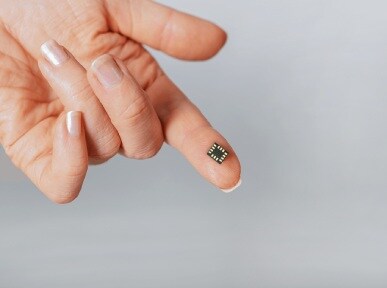
Key advantages of micro-electromechanical systems
Key advantages of micro-electromechanical systems
The impact of MEMS technology on modern electronics systems is profound. MEMS devices offer a unique combination of advantages that enable significant advancements in product performance, functionality, and overall system efficiency.
- Miniaturization: MEMS devices are exceptionally small and lightweight, allowing them to be integrated into space-constrained applications, such as compact industrial equipment, wearable medical devices, and automotive systems throughout the vehicle. This miniaturization has been a key driver behind the form-factor reduction in modern electronics.
- Low power consumption: their small size and mass contribute to minimal power requirements, a critical feature for battery-powered devices. This is particularly important for remote IoT sensor nodes and other applications where extending operational life is a primary design constraint.
- High performance and precision: despite their microscopic scale, MEMS sensors provide high levels of accuracy, resolution, and reliability. Advanced fabrication allows for the creation of highly sensitive mechanical structures capable of detecting subtle physical changes.
- Cost-effective mass production: by leveraging established semiconductor manufacturing processes, millions of MEMS devices can be produced simultaneously on a single silicon wafer. This batch fabrication leads to a significantly lower cost per unit compared to traditional macroscopic sensors, enabling widespread adoption.
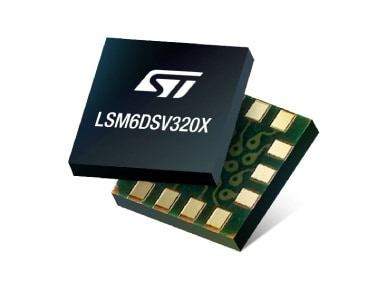
STMicroelectronics maximizes these advantages through its latest generation of intelligent sensors, such as the LSM6DSV320X and its industrial counterpart ISM6HG256X. These devices integrate both low-g and high-g accelerometers into a single package, increasing sensor accuracy while reducing system complexity.

Equipped with an embedded Machine Learning Core (MLC), they can locally process complex data patterns, such as high-impact shock detection or activity recognition. This significantly reduces power consumption compared to traditional host-based processing architectures. In addition, the LPS28DFW, an ultra-compact piezoresistive pressure sensor, functions as a digital output barometer and provides accurate measurements in harsh environments, enabling altitudes estimation and water depth detection.
Real-world applications of MEMS
The unique characteristics of MEMS have led to their adoption in nearly every major technology sector. The answer to "what is MEMS" is best understood through its real-world use cases.

Industrial and IoT applications
Industrial and IoT applications
In industrial settings, MEMS sensors are fundamental to the development of smart factories (industry 4.0/5.0) and the internet of things (IoT).
- Predictive maintenance: MEMS vibration sensors can be attached to machinery to monitor its condition in real-time. By detecting unusual vibration patterns indicative of wear or malfunction, they can predict potential failures before they occur, reducing downtime and maintenance costs.
- Environmental monitoring: MEMS-based gas and humidity sensors are deployed in environmental monitoring systems and smart buildings to ensure air quality and optimize energy consumption. High accuracy pressure sensors enable precise altitude and fluid level measurements.

Automotive systems
Automotive systems
The automotive industry was an early adopter of MEMS technology, using it to enhance vehicle safety, reliability, and performance.
- Safety systems: MEMS accelerometers are essential for airbag deployment, detecting sudden deceleration during a collision. MEMS pressure sensors are used in tire pressure monitoring systems (TPMS).
- Vehicle stability and navigation: high-performance gyroscopes and accelerometers are core components of electronic stability control (ESC) systems and provide critical data for dead-reckoning navigation when satellite signals are unavailable.

Consumer electronics
Consumer electronics
Perhaps the most visible application of MEMS is in consumer devices, where they enhance user interfaces and enable new functionalities.
- Smartphones and tablets: MEMS accelerometers and gyroscopes, enable screen orientation, gesture recognition, and optical image stabilization.
- Wearable technology: smartwatches and fitness trackers use MEMS accelerometers to count steps and monitor activity, while MEMS pressure sensors track elevation changes for stair climbing metrics.

Healthcare technology
Healthcare technology
In the medical field, MEMS technology is enabling advanced diagnostic and monitoring devices.
- Diagnostic tools: MEMS pressure sensors are used in disposable blood pressure sensors and infusion pumps. Lab-on-a-chip devices utilize microfluidic MEMS to perform complex biochemical analyses.
- Health monitoring: MEMS biosensors can monitor physiological parameters, while motion sensors are used in rehabilitation devices to track patient recovery progress.
The future of MEMS technology
The evolution of micro-electromechanical systems continues at a rapid pace, and so does ST's third generation of MEMS. This era is defined by the integration of AI capabilities, with embedded machine learning cores (MLC) and intelligent sensor processing units (ISPU), available in inertial measurement modules.
These features enable sensors to perform local data processing and autonomous context awareness, significantly reducing system latency. Furthermore, ST is expanding the boundaries of MEMS through innovations like the LSM6DSV320X, which introduces dual-sensing mechanical structures to capture both high-impact and subtle movements at the same time.
Understanding MEMS is key to unlocking new possibilities in system design and innovation. From enabling autonomous vehicles and robotics to powering the next generation of industrial IoT devices and medical innovations, the potential for these microscopic systems is immense.