LEO connectivity

Technical innovation and manufacturing excellence in LEO technologies
Reliable broadband services everywhere
Low Earth orbit (LEO) satellite networks are gaining strong momentum as a new layer of global connectivity. These networks address a wide range of use cases from ubiquitous broadband access in remote and underserved areas, to low-latency connectivity for moving platforms such as aircraft, trains, and nomadic users.
They also provide a critical communications lifeline in the aftermath of natural disasters, when terrestrial infrastructure is disrupted, and offer an additional layer of connectivity resilience for applications that cannot rely solely on ground networks.
Among the most promising developments is direct-to-device (D2D) connectivity, a rapidly emerging use case that extends satellite communication directly to standard devices and drives broader market interest in LEO services. In addition, the upcoming orbital data center opportunity is expected to further expand the role of LEO infrastructure in enabling next-generation space-based computing and data processing.

ST is a strategic partner for enabling LEO innovation at scale
For more than 45 years, ST has built deep expertise supporting space systems. This illustrates our ability to deliver reliable technologies at scale, built to perform in harsh radiation environments and over long mission lifetimes.
Through innovative process technologies, system-level expertise, and high-scale manufacturing, ST is a deep technology enabler of the LEO ecosystem, delivering solutions across the entire value chain.
ST supports multiple LEO constellation projects worldwide, addressing both space and ground segments of the ecosystem. This multi-constellation approach underpins ST’s long term commitment to the LEO market and its evolution.
ST’s strategic position in the LEO market

Remi El-Ouazzane, President, Microcontrollers, Digital ICs, and RF Products Group, explains ST’s technological contributions to user terminals and satellite systems, our collaboration with leading LEO operators, and our long-term vision for advancing space applications.


How ST enables the LEO infrastructure
ST’s differentiated technology portfolio
The LEO infrastructure spans from in-orbit satellite payloads to ground gateways and consumer user terminals. ST’s differentiated technology portfolio supports every node in this ecosystem, delivering performance, scalability, and long-term reliability. It has contributed to LEO ecosystem value creation through BOM cost optimization and product innovation.
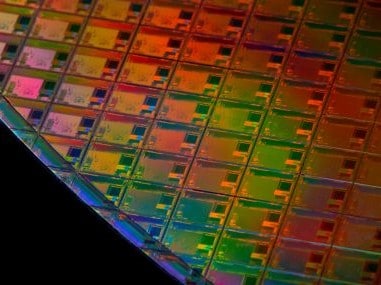
BiCMOS technology
BiCMOS delivers compact RF circuits with strong Ku/Ka-band performance, low noise, good linearity, and robust output power handling.

FD-SOI technology
Already flying in both LEO and GEO missions, FD-SOI supports advanced SoC design with radiation-capable features.
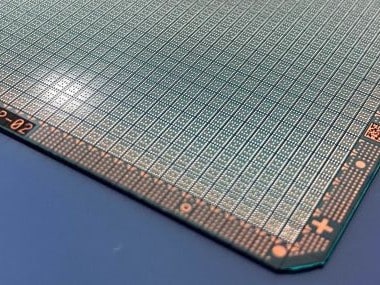
Panel-level packaging
Panel-level packaging enables the automated assembly and testing of advanced chips, supporting cost-effective scaling.

Frequently asked questions
Low Earth orbit (LEO) connectivity relies on large constellations of satellites orbiting closer to Earth than traditional geostationary systems. This proximity enables high‑speed, low‑latency broadband, making LEO a foundational infrastructure for global connectivity. Because LEO satellites move relative to the Earth and operate as coordinated constellations rather than individual platforms, they can deliver continuous, global coverage, even across remote areas.
LEO connectivity enables low-latency, high-throughput links through a rapidly moving satellite constellation, which creates significant technical challenges for the user terminal. The terminal must continuously track the satellite by electronically steering a beam with a phased-array antenna (beamforming). This requires a significant amount of RF and control electronics to operate in real time across many antenna elements. The challenge is not only to achieve accurate tracking and stable link performance, but also to do so in a compact, cost-effective solution that can be manufactured at scale.
Since 1977, ST has supported European space initiatives, holding ESA qualifications since its inception and later adding the American QML-V certification. ST delivers advanced space-grade technologies in RF, analog, power, and FD-SOI for digital applications, enhanced by specialized space hardening expertise.
BiCMOS combines the speed and analog capability of bipolar devices with the integration benefits of CMOS, enabling compact RF circuits with strong performance at Ku/Ka-band and beyond, low noise figure, good linearity, and robust output power handling. These technical advantages are what make BiCMOS a compelling choice for the chips used in electronically steered antennas (ESAs) for LEO user terminals.