
Humanoid robots transforming factory workflows
In modern factories and warehouses, robots no longer just lift heavy loads or move pallets from one point to another. Increasingly, they are taking over the most delicate and demanding part of the process: the work usually entrusted to the human hands. Ruiyan Intelligent Control, a robotics company, has developed humanoid robotic hands that can step in where human operators are at risk, while still offering the speed and precision industry needs. At the heart of each palm is a compact “electronic nervous system” built on STMicroelectronics chips, which give the robot the fine control it needs to work safely and accurately alongside humans.

Challenge
- Develop humanoid robotic hands that can safely take over delicate, high‑precision manual tasks in factories and warehouses.
- Fit full multi‑axis motor control, sensing, and protection into an extremely compact 6 × 6 cm board inside the palm.
- Deliver strong, human‑like gripping force without excessive heat or bulky cooling in a tight mechanical envelope.
- Ensure reliable, long‑duration operation in harsh industrial environments, working side‑by‑side with people.

Solution
- STM32 microcontrollers coordinate up to five joints with six degrees of freedom.
- Advanced STM32 timers and high‑precision ADCs for tightly synchronized motor control and continuous position/force feedback.
- ST motor drivers, DC‑DC converters, and low‑voltage MOSFETs to deliver high torque with low energy losses and reduced heat.
- Protect the compact electronics with ST Transient voltage suppressors (TVS).

Impact
- Automate hazardous or repetitive tasks, improving worker safety while freeing people for higher‑value activities.
- Help factories maintain continuity during labor shortages, peak demand, or disruptive events.
Engineering agile, dexterous robotic hands
To be truly useful in industrial automation, a humanoid robotic hand must adapt its grip to different shapes, weights, and materials, much like a human hand does when switching from a screw to a glass bottle. Ruiyan pulled off this feat by packing the entire control system into a single six-layer printed circuit board measuring just 6 x 6 centimeters -small enough to sit in the palm. An STM32 microcontroller acts as the central controller, coordinating up to five joints with six degrees of freedom. At the same time, several high‑precision ST analog‑to‑digital converters are continuously reading sensor values to know exactly where the fingers are and how much force they are applying.
“
Our six degrees of freedom dexterous hands use over 90% of chips from ST.”
Paul Tian, CEO, Ruiyan Intelligent Control
How to keep heat down as power goes up?
Inside a robotic hand, space and temperature are as critical as strength. Pack in too much power without control and it is like putting a race engine in a tiny car: the heat and stress quickly become a problem. Ruiyan addresses this using ST’s motor drivers. These chips are designed with very low electrical resistance inside, which means less energy is lost as heat when current flows through them. They can also deliver a strong current to the motors, giving each joint the torque it needs to move precisely. Together, these features allow the hands to produce enough force for a wide range of tasks without overheating. Because less heat is generated, the components operate more reliably, a must in round-the-clock industrial environments. It also means the mechanical design can stay slimmer and simpler, without bulky cooling systems, leaving more room for what really matters: smarter, more capable fingers.
Making humanoid robots practical for high-mix production
In more practical terms, what do dexterous humanoid robots actually deliver on the factory floor, when the clock is ticking and every misstep has a cost? Built on ST technology, Ruiyan’s robotic hands can position its fingers with ‑millimeter accuracy (about the thickness of a credit card). With a maximum grasping force of newtons, roughly equivalent to a strong human grip, it can clamp heavy tools and then immediately switch to handling fragile goods. This closed‑loop feedback, combined with a system engineered for more than hours of continuous operation, let the robotic hands adjust in real time and run through very long shifts on factory floors.
For manufacturers, humanoid robots mean a more flexible automation platform, one that can easily adapt as product mixes change over time. Building on ST’s technology platform, Ruiyan delivers a portfolio of dexterous robotic hands including ready‑to‑integrate options designed specifically for ST customers who want to embed custom manipulators into larger systems.
“
ST is now more than a supplier, through a joint lab, we now drive humanoid robotics co-innovation worldwide.”
Paul Tian, CEO, Ruiyan Intelligent Control

CUSTOMER
Ruiyan Intelligent Control (Shenzhen Ruiyan Intelligent Control Co., Ltd)

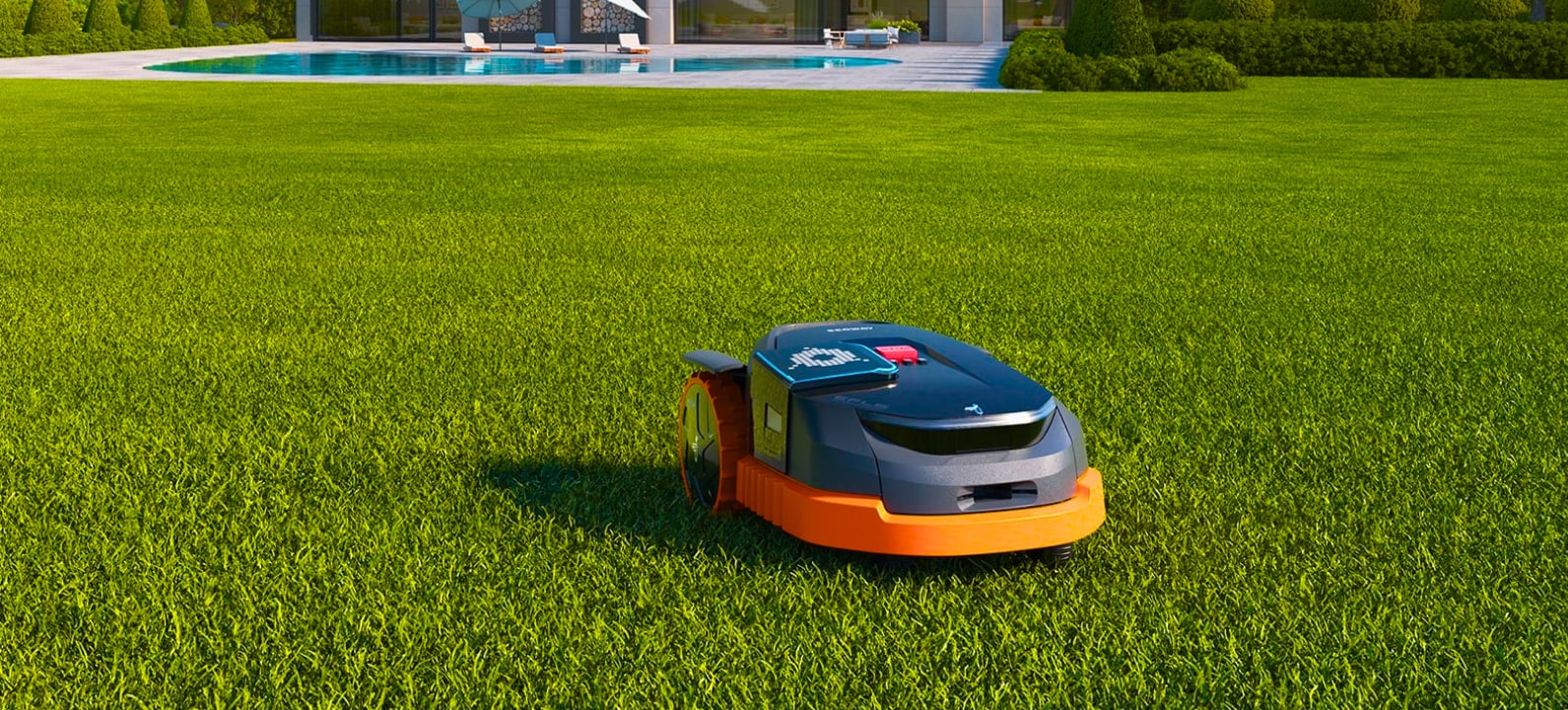
Segway Navimow: Growing the future of consumer robotics